We’re thrilled to welcome Hailey Harrison and Marisol Valdez from StudioSIX5 as guest contributors to our blog.
As part of the team bringing FiftyTwoNorth to life, Hailey and Marisol share a thoughtful look at the trends shaping senior living in 2026. From rising demand to integrated technology, sustainable materials, and hospitality-inspired spaces, they explore how design is creating environments that feel less like healthcare and more like home.
Their perspective is a reminder that great senior living design isn’t just about buildings — it’s about connection, dignity, and purpose at every stage of life.


Designing for Life, Connection & Purpose
Senior living is not just about housing; it’s about creating environments where people thrive at every stage of aging. Through demographic shifts, evolving expectations, and technology advancements, providers and designers are reimagining what it means to age well.
Read about the major trends that are shaping the senior living community today.
Supply Demand Surges
Occupancy rates are rising and nearing historic highs: demand for senior housing continues to climb faster than new units are built. New units are being built selectively, not at the scale needed to keep pace with demographic shifts. With the oldest Baby Boomers turning 80 this year, demand for senior living options is projected to reach record levels, even as new construction remains constrained by costs and labor shortages.
This supply-demand gap increases stress on families seeking options, pushes older adults to secure housing earlier, and underscores the need for strategic design that makes the most of existing communities: adaptive reuse and future-ready planning.
Care-Driven Technology
Technology is no longer futuristic; it’s fully integrated in today’s communities. Smart systems, sensor networks, AI-enhanced insights, and integrated platforms are improving safety, personalization, and communication.
Examples include:
- AI-assisted health monitoring that supports proactive care plans.
- Smart home devices and wearables that support independence and safety.
- Data-driven tools that help care teams allocate time more meaningfully.
Technology should augment care, not replace it. When used well, technology supports care teams by creating space to let them focus on what senior living is really about: attentive care, stronger relationships, and everyday connection.
Whole Person Wellness
Wellness in senior living has evolved dramatically. Beyond clinics and exercise rooms, communities are now designing environments that support mental, emotional, social, and physical well-being, every day and in every space.
Key features defining wellness today:
- Mind-body fitness and longevity programming.
- Social engagement initiatives that combat isolation.
- Nutrition programs tailored to personalized health goals.
True wellness design meets people where they are. It celebrates the whole person, not just clinical metrics, supports thriving, not just surviving.
Flexible Care Models
Today’s residents are demanding choice and flexibility. Hybrid models including continuum-of-care, independent living with optional services, and “IL-Lite” formats are reshaping how people age within a community without disruptive transitions.
This includes continuum-of-care communities that allow seamless transitions and models that blend independent lifestyle with optional care. Flexibility honors autonomy and dignity. It means people don’t have to choose between independence and support; they design their own continuum of living.
Integration Beyond Silos
Senior living is increasingly becoming interwoven with broader community life. Instead of isolated campuses, we’re seeing:
- Intergenerational spaces that invite multiple age groups together.
- Repurposing of urban spaces for mixed-use communities.
These innovations reflect a shift toward environments where older adults live among the broader population, rather than apart from it. Intergenerational interaction reduces social isolation, enriches community life, and builds purpose across generations: a powerful embodiment of people-first design.
Design Reflects Home, Not Healthcare
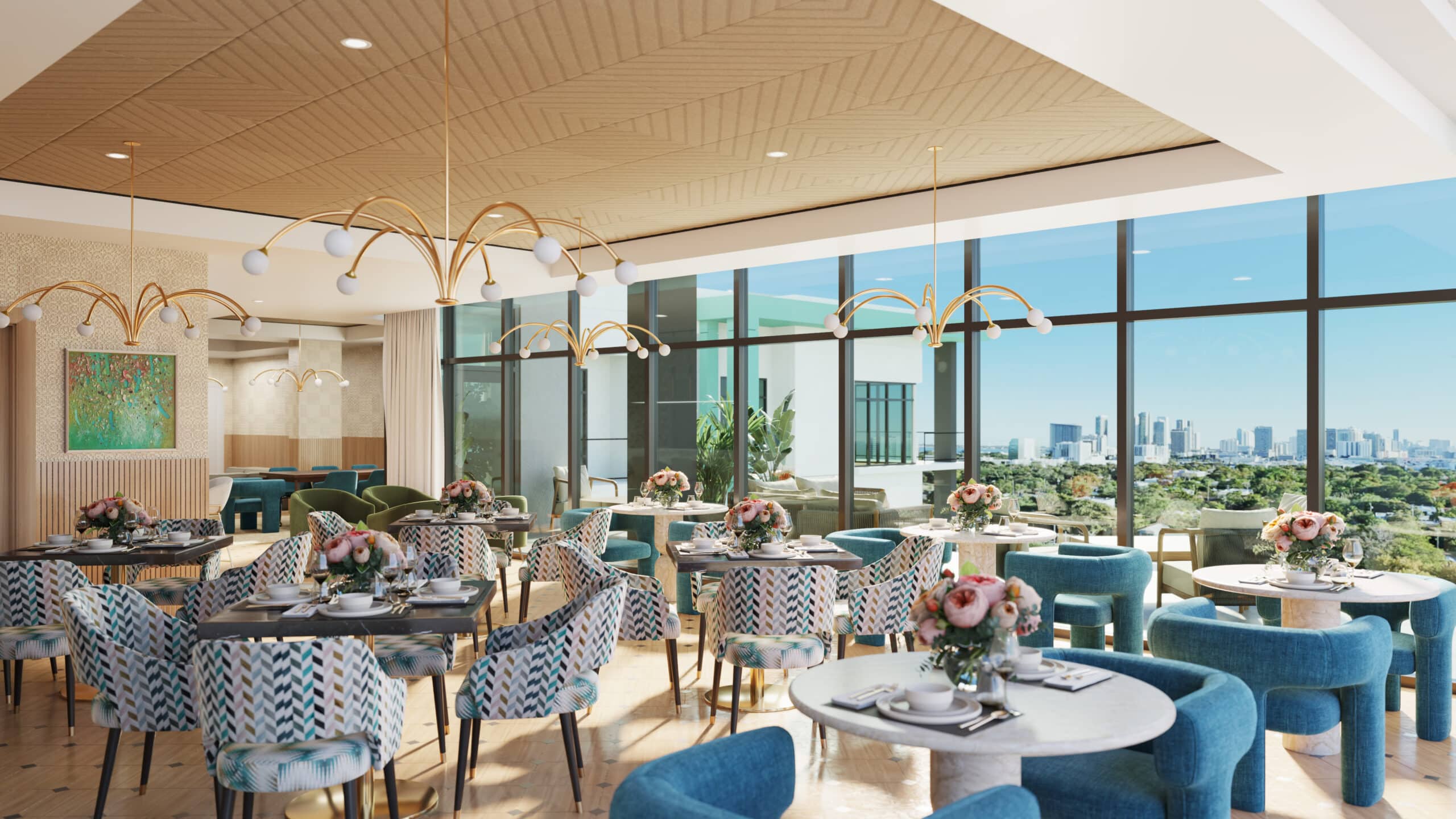
Design trends in 2026 reflect a shift toward authentic residential experiences — spaces that feel familiar, comfortable, and personalized. This means biophilic design that connect residents with nature, common areas that feel like living rooms instead of waiting rooms, and culinary and lifestyle amenities that rival commercial quality.
Environment shapes emotion. When spaces feel like home, residents feel more at ease, more engaged, and more themselves.
Hospitality-Inspired Interiors Continue to Evolve
Hospitality-driven design remains a defining influence in senior living and continues to gain momentum in 2026. Communities are deepening their focus on comfort and experience, not just aesthetics, creating spaces that feel warm, welcoming, and residential.
Expansive amenities and resort-style destinations are being programmed into senior living communities to provide a diverse experience that not only supports a dynamic and rich lifestyle for residents but also encourages friends and family to come visit more frequently.
From multiple dining venues, full-service wellness and spa experiences, arcades and bowling allies, art galleries and performance spaces to resort style pools with cabanas and outdoor dining, senior living is pulling out all the stops while implementing design concepts that nurture a sense of home and promote adventure and camaraderie.
Spaces are even being designed to support pets. Veterinary clinics, pet washes, pet parks and green spaces are elevating the lifestyle of our furry friends as well.
Authentic materials such as wood, stone, unlacquered brass, and warm nickel add timeless character, while smaller-scale, vintage-inspired seating creates intimate conversation zones. Textiles are increasingly tactile and layered, with earthy palettes and rich patterns that bring warmth and personality. Sustainability continues to influence material selections, and integrated technology, including discreet charging is becoming seamless within the residential aesthetic.
Trends With Heart
The senior living sector in 2026 is defined by integration, personalization, and human dignity. These aren’t just operational shifts, they reflect a deeper understanding that aging is a lived experience, shaped by connection, autonomy, and purpose.